The Legend of Zelda
An Open World Adventure Without a Tutorial
Date: October 10, 2025 |
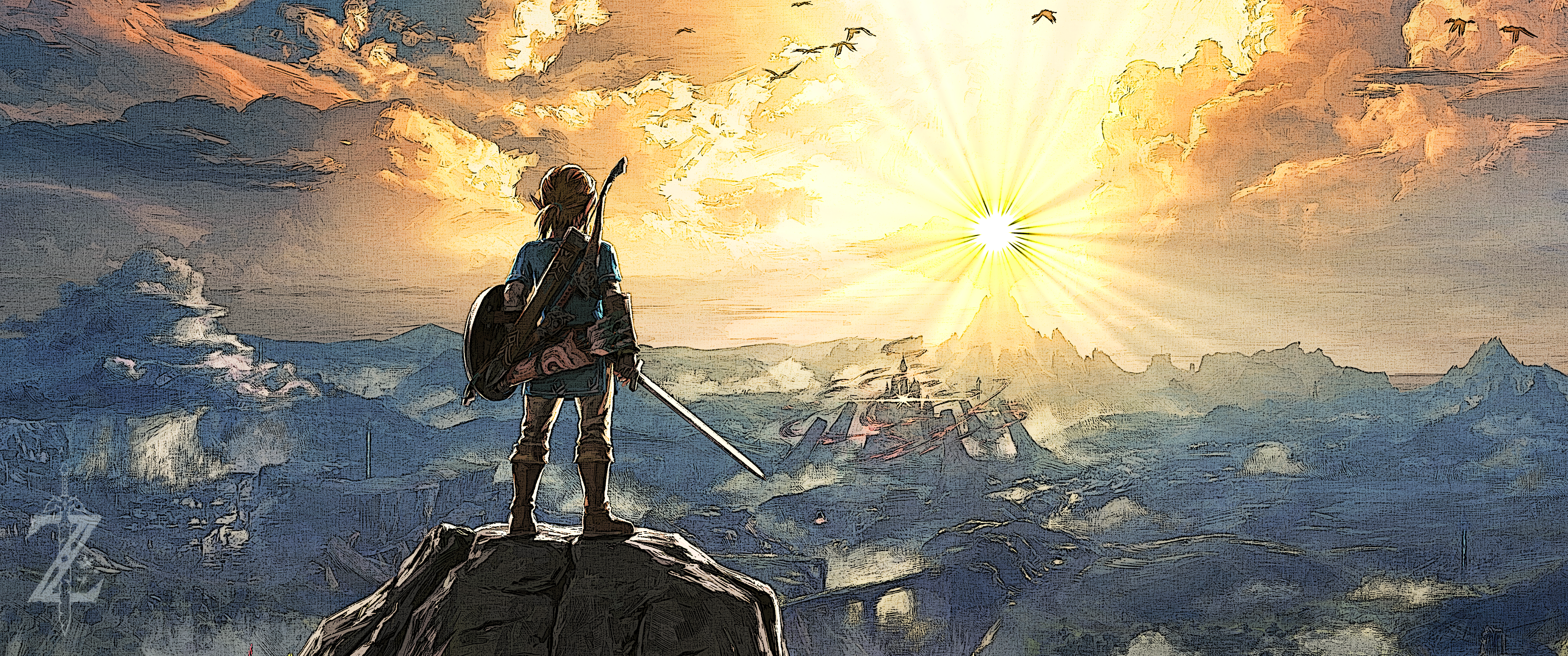
When Link awakens, there is a vast, unfamiliar land, with no levels, no equipment, no strength to rely on, and no clear direction.
While the world is already in motion.
Hyrule exists as a complete and indifferent place. The main quest is present: the princess is trapped, the calamity spreads; mountains rise in the distance, wind moves through the grass, and villages glow quietly at sunset.
The castle stands where it always has. So do countless paths leading elsewhere.
Enemies strike just as hard. Cliffs remain just as steep. Weather shifts without warning. Danger exists long before preparation.
Progress, when it comes, arrives unevenly, through persistence and misjudgment rather than destiny.
Strength is not announced. It accumulates quietly. And the world continues regardless.
Freedom in The Legend of Zelda is expansive, but never careless.
Rain turns cliffs into obstacles. Greed is punished swiftly. Curiosity opens doors that cannot always be closed again.
Nothing prevents action. Only consequence remains.
Zelda is often framed as someone to be rescued. The game presents something subtler.
While Link wanders and grows, she remains, holding the seal, bearing the cost, enduring time itself.
Two journeys unfold in parallel, separate, yet aligned.
Protagonism belongs not only to Link, but also to Zelda.
Survival in Hyrule rarely depends on numbers alone.
Understanding terrain, weather, and systems proves more reliable than stronger equipment.
Progress shifts from accumulation to comprehension.
The final enemy waits in the castle from the beginning.
But no urgency is enforced. Wandering is permitted. The destination remains fixed. The path does not.
Much of The Legend of Zelda is quiet.
Wind moves through empty fields. Sparse piano notes echo among ruins. Long stretches unfold without dialogue.
There is no audience. Only movement through space and time.
When the battle is finally over, the story ends.
The screen fades. The world is saved. Credits roll.
Yet what follows is left untold.
The game speaks in detail about the journey toward the castle, but says little about what comes after. About the days beyond survival. About living with what has been gained and what has been lost.
Perhaps that silence is intentional.
Because the first half is about becoming, learning how to move, how to endure, how to understand the world.
What follows may be something else entirely: experience turning into responsibility, victory giving way to attachment, and freedom slowly reshaped by care, family, friends, and contribution.
The adventure begins alone. But it may not end that way.
And somewhere beyond the final battle, a different journey quietly starts, one the game no longer needs to explain.